
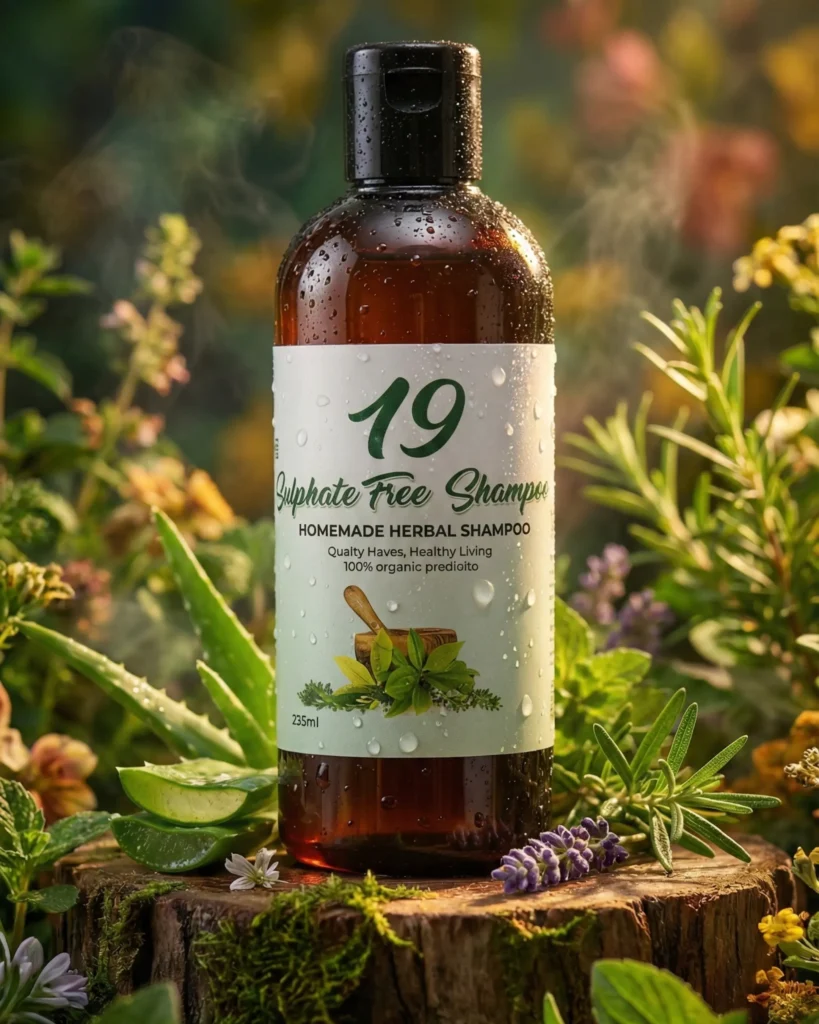
You have probably seen “sulphate-free” written on shampoo bottles and wondered whether it matters — or whether it is just another label. In simple words: sulphates (usually SLS or SLES) are the strong foaming agents that make a shampoo lather thickly. A sulphate-free shampoo cleans with milder agents instead. It is not a different product category with magic powers — it is the same job (clean hair) done more gently.
Whether that gentleness is worth it for you depends on your hair, not on the trend. This guide explains what the label actually means, who genuinely benefits from switching, who can skip it, and how to make the switch without a rough first week.
What sulphate-free really means
A sulphate-free shampoo simply leaves out the harshest foaming cleansers. It still cleans — the mild cleansers it uses remove oil, sweat and dust from the scalp. The two differences you will notice:
- Less foam. Thick lather is mostly a sulphate signature. Less foam does not mean less cleaning — it means gentler cleaning.
- Less stripping. Strong sulphates take the scalp’s natural oils along with the dirt. Milder cleansers leave more of that protective oil behind, so hair feels softer after the wash instead of squeaky-dry.
One thing it is not: sulphate-free does not mean chemical-free or “all natural”. Every shampoo needs some cleanser to work. The honest claim is milder washing, not zero chemistry.
Who actually needs a sulphate-free shampoo
Dyed or coloured hair. This is the clearest case. Strong cleansers wash colour molecules out faster — a fresh dye job fades noticeably quicker with a harsh shampoo. If you colour your hair (including with our 19 Black Shampoo), a gentle sulphate-free wash is the simplest way to make the colour last longer between applications.
Dry, rough or frizzy hair. If your hair already loses moisture easily, a stripping shampoo makes it worse — dry hair breaks, and breakage looks exactly like hair fall. A milder wash keeps more of the hair’s own moisture in place.
Sensitive or easily irritated scalps. If your scalp feels tight, itchy or uncomfortable after washing, the cleanser is often the culprit. A gentler formula is usually the first thing worth trying before any remedy.
Hard-water areas. Much of Pakistan has hard water, which already stresses hair. A mild shampoo does not add a second problem on top.
Who can skip it
Honesty matters here: sulphate-free is not better for everyone. If your scalp gets very oily within a day, a mild shampoo may leave it feeling unclean — very oily scalps sometimes genuinely need a stronger cleanse, or a mild shampoo used twice in one wash (more on that below). And if your current shampoo causes no dryness, no itch and no colour fading, there is no problem to fix. A sulphate shampoo is not “bad” — it is just the wrong tool for dry, coloured or sensitive hair.
Signs it is time to switch
- Your hair colour fades within a week or two of dyeing.
- Your hair feels dry, rough or straw-like right after washing.
- Your scalp feels tight or itchy after a wash.
- You wash often (daily or every other day) — frequent washing multiplies the stripping effect of a harsh formula.
How to switch without a rough first week
Hair that is used to strong cleansers needs a short adjustment. For the first one or two weeks it may feel a little different — slightly coated or less “squeaky”. That is normal, and it passes. Three tips make it smooth:
- Wash twice, gently. Low-foam shampoos clean best in two light rounds: the first lifts the oil and dust, the second actually cleans the scalp. Use a small amount each time and massage with your fingertips, not your nails.
- Focus on the scalp. Shampoo is for the scalp; let the rinse carry the lather through the lengths. Scrubbing the lengths dries them out whatever shampoo you use.
- Give it two weeks. Judge the switch after 10–14 days of consistent use, not after the first wash. Hair adjusts slowly.
An honest note: a gentler shampoo reduces dryness and breakage, and it helps colour last longer — but it cannot stop colour from fading entirely, repair split ends, or reverse hair loss. It is better washing, not a treatment.
Where 19 by Afrroze fits in
Our 19 Sulphate-Free Shampoo (200ml Rs 840 · 250ml Rs 1,050) is a homemade herbal shampoo made for exactly the cases above — coloured hair that needs to hold its shade, and dry or sensitive scalps that need a milder wash. Like everything in the 19 range, it is made in small batches with formulas supervised by certified Tabib Mr. Hafiz Yasir Latif Qureshi.
Not sure whether your hair needs the gentle route or a regular wash? Take the free Product Finder Quiz — it asks a few questions and recommends from the range. To order, message us on WhatsApp: +92 335 7513111.
Frequently asked questions
Is sulphate-free shampoo better for everyone?
No. It is better for coloured, dry or sensitive hair — and for frequent washers. Very oily scalps sometimes need a stronger cleanse, and a mild shampoo may need two rounds per wash there.
Why does it foam less — is something wrong with it?
Nothing is wrong. Thick foam comes from the harsh cleansers this type leaves out. Less foam is the sign of the gentler formula, not of a weak product.
Will it clean oily hair properly?
Yes, if you use the two-wash method: a small amount twice, massaged into the scalp. Extremely oily scalps may still prefer a stronger shampoo — that is a fair reason not to switch.
Does sulphate-free shampoo stop hair fall?
It reduces breakage by drying hair out less, which is where a lot of everyday “hair fall” actually comes from. It cannot reverse genetic or hormonal hair loss — see a doctor if hair falls in patches or very suddenly.
Can I use it every day?
Yes — in fact, frequent washers are among the people who benefit most, because a mild formula strips less with each wash.