
You change your shampoo, you oil your hair, you eat well — and still your hair feels rough, looks dull, and breaks when you comb it. Before you blame the shampoo again, look at something much more basic: the water coming out of your tap.
In much of Pakistan, tap water is hard. That is not a comment on cleanliness. It simply means the water carries a high amount of dissolved minerals, mainly calcium and magnesium. Those minerals do not rinse away cleanly. They stay behind on your hair and scalp, wash after wash, and over time they change how your hair feels and behaves.
What hard water actually does to hair
Think of it like this. Every wash leaves a very thin mineral film on each hair strand. One wash is nothing. Months of washes build up, and that build-up does three things:
- It makes hair dry and rough. The mineral layer stops moisture from getting into the hair properly, so hair feels straw-like even right after washing.
- It makes hair dull and stiff. Shine comes from a smooth hair surface that reflects light. A mineral-coated surface is rough, so it reflects light unevenly — and hair looks flat and lifeless.
- It makes hair easier to break. Dry, stiff hair snaps more easily when combed or brushed, especially when wet. That breakage is often mistaken for hair fall from the roots, when in fact the hair is breaking along its length.
Hard water also affects the scalp. Mineral residue can sit on the scalp after washing, leaving it feeling tight, itchy or flaky — which is one reason hard water and dandruff often appear together. It can also make shampoo harder to rinse out fully, so a sticky, coated feeling remains even after a long rinse.
An honest limit first: hard water does not, on its own, decide whether you lose hair. Hair fall has many causes — genetics, hormones, stress, illness, diet and harsh handling all play a part. What hard water reliably does is weaken the hair you have, so more of it breaks. Fixing the water side will not regrow hair, but it can noticeably reduce the dryness and breakage that make hair fall look worse.
How to tell if your water is hard
You do not need a test kit to spot the usual signs. Look for several of these together:
- White, chalky marks on taps, showerheads and bathroom tiles that return quickly after cleaning.
- Soap and shampoo that barely lather, or need much more product than expected to foam.
- Hair that feels coated, waxy or rough after washing, even when you have rinsed for a long time.
- A kettle or water heater that scales up inside.
- Skin that feels tight and dry after a bath, with no change in soap or weather.
If most of these sound familiar, your water is very likely hard. Bore water and groundwater in many Pakistani cities tend to be harder than treated supply water, and the problem often gets worse in winter, when cold, dry air is already drying hair and scalp.
A simple routine that works with hard water
You cannot change your city’s water overnight, but you can change what it leaves behind. This routine is deliberately simple — four habits, done steadily:
1. Oil before you wash, once or twice a week
Warm a small amount of oil in your palms and massage it gently into your scalp and along the lengths with your fingertips, not your nails. Leave it for an hour or two, then wash. Oiling before washing protects the hair from the harshest part of the wash and keeps the scalp from drying out between washes.
19 Herbal Hair Oil by Afrroze (100ml, Rs 1,320) is made for this pre-wash step — a homemade herbal oil in small batches, with formulas supervised by certified Tabib Mr. Hafiz Yasir Latif Qureshi.
2. Wash gently, and rinse longer than you think
Use lukewarm water, never very hot — hot water strips the scalp’s natural oils and leaves hair even drier. Work a gentle shampoo through the scalp with your fingertips, let the lather run down the lengths rather than scrubbing the ends, and then rinse thoroughly. With hard water, the rinse matters as much as the wash: give it an extra minute, because mineral residue and shampoo residue leave together, slowly.
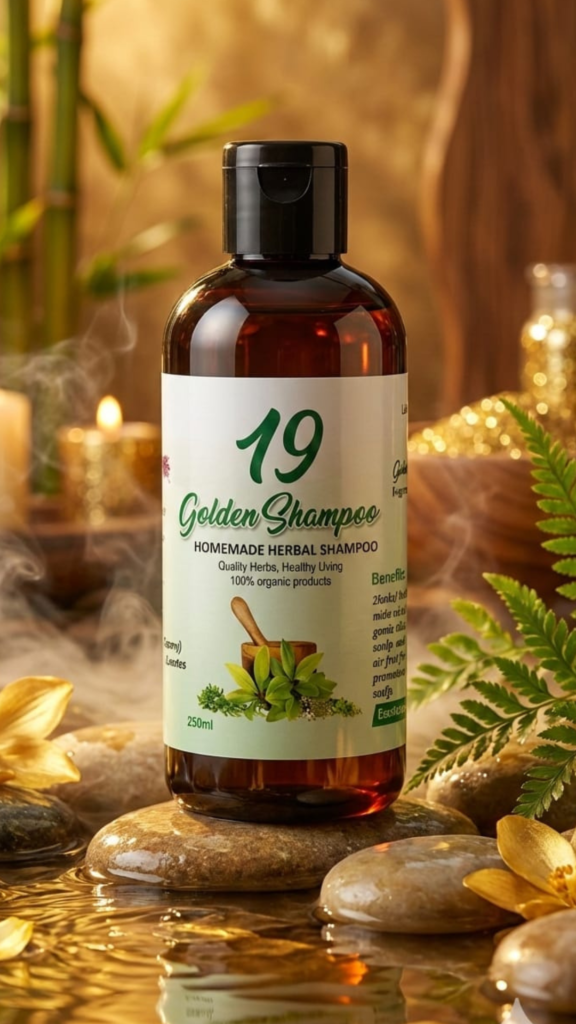
For everyday washing, 19 Golden Shampoo (200ml Rs 750 · 250ml Rs 930) is the regular homemade herbal wash in the range. If your hair is coloured, or your scalp is dry or sensitive, a milder wash is the better tool: 19 Sulphate-Free Shampoo (200ml Rs 840 · 250ml Rs 1,050) cleans without the harshest foaming agents, so it adds less dryness on top of what hard water already causes.
3. Be gentler when hair is wet
Wet hair stretches and breaks far more easily than dry hair, and mineral-coated hair is already stiffer. Pat hair dry with a soft towel instead of rubbing it hard, detangle from the ends upward with a wide-toothed comb, and avoid tight, pulling hairstyles while hair is still damp.
4. If you can, soften the final rinse
Some households fit a shower filter, and some people finish with a final rinse of filtered or boiled-and-cooled water. Neither is a 19 product, and neither is essential — but if build-up is your main problem, reducing the minerals in even the last rinse can make a visible difference over a few weeks. Treat any filter as a helper, not a cure: it reduces new build-up, it does not repair hair that is already damaged.
What not to do
- Do not wash more often to fix the coated feeling. More washing with the same hard water only adds more mineral film, and strips more of the scalp’s own oils.
- Do not use very hot water. It feels thorough, but it dries both scalp and hair further.
- Do not scrub the scalp hard. Scrubbing does not remove mineral build-up — it irritates the scalp and breaks wet hair.
- Do not expect overnight change. Build-up took months to form. Give the routine four to six weeks of steady use before judging it.
When to get something checked
If hair is falling in patches, the scalp shows red, sore or thick scaly areas, or shedding suddenly becomes much heavier, that is worth showing to a doctor. Home care helps with dryness, roughness and breakage from hard water; it is not a substitute for medical advice when something looks or feels unusual. The same applies to the related causes covered in our hair fall guide — most everyday shedding has a simple explanation, but sudden or patchy loss deserves a proper check.
Frequently asked questions
Does hard water cause hair fall?
Not on its own. Hard water weakens the hair you have, so more of it breaks — but hair fall itself has many causes, including genetics, hormones, stress, illness, diet and harsh handling. Fixing the water side will not regrow hair, but it can noticeably reduce the dryness and breakage that make hair fall look worse.
How do I know if my water is hard?
Look for several signs together: white, chalky marks on taps and tiles that return quickly after cleaning, soap and shampoo that barely lather, hair that feels coated or rough even after a long rinse, a kettle that scales up inside, and skin that feels tight and dry after a bath.
Will changing my shampoo fix hard water damage?
Shampoo alone will not fix it, because the mineral film comes from the water, not the shampoo. What helps is the full routine: oil before washing, wash gently in lukewarm water, rinse longer than you think, and handle wet hair gently. A shower filter or a final rinse of filtered water can reduce new build-up, but it does not repair hair that is already damaged.
How long before I see a difference?
Build-up took months to form, so give the routine four to six weeks of steady use before judging it. If hair is falling in patches, the scalp shows red, sore or thick scaly areas, or shedding suddenly becomes much heavier, show it to a doctor instead of waiting.
Where 19 by Afrroze fits in
The Afrroze part of this routine is deliberately small: a pre-wash oil, a gentle wash, and patience. Oil with Herbal Hair Oil, wash with Golden Shampoo for everyday use or Sulphate-Free Shampoo for coloured, dry or sensitive hair, rinse well in lukewarm water, and handle wet hair gently. The rest — a longer rinse, a softer final rinse where possible, and steady consistency — costs nothing and matters just as much.
Not sure which shampoo suits your hair? Take the free Product Finder Quiz — it asks a few questions and recommends from the range. To order, message us on WhatsApp: +92 335 7513111.