
Every winter in Pakistan, the same complaint comes back: the scalp feels dry and itchy, hair looks dull, and more strands seem to come out in the comb. It is not your imagination, and it is not usually one single cause. Cold, dry air outside, hot water in the shower, wool caps, and fewer washes all pile up on the same scalp — and the routine that worked in summer quietly stops working.
The good news is that a winter routine does not need to be complicated or expensive. It needs three changes: wash more gently, oil before washing, and stop the habits that dry the scalp out further. This guide gives you exactly that — one routine, in plain language, for a Pakistani winter.
Why winter is hard on hair
In summer, humidity keeps hair softer and the scalp’s own oils spread easily. In winter, the air turns dry, especially in northern Pakistan and on cold, windy days in the plains. Dry air pulls moisture out of the hair shaft, which makes hair feel rough and break more easily — and breakage is often mistaken for hair falling from the root.
Then we make it worse without realising it. Very hot water in winter strips the scalp’s natural oils. Washing less often in the cold lets dust, sweat and flakes build up. Wool caps and scarves trap heat and sweat against the scalp. And indoor heaters dry the air further. None of these is a disaster on its own; together, they leave the scalp tight, flaky and itchy.
One honest distinction matters here: winter dryness and dandruff can look alike, but they are not the same thing. Dry winter flakes are usually small, dry and white, and the scalp feels tight. Dandruff flakes tend to be larger, slightly oily and yellowish, and the scalp is often itchy and red. If you are not sure which one you have, our dandruff guide explains the difference. If the scalp is red, sore, or flaking heavily, see a doctor rather than trying a stronger home routine.
The winter routine, step by step
1. Wash with lukewarm water, not hot. This is the single biggest winter change. Hot water feels wonderful on a cold morning, but it strips oil from the scalp and leaves hair drier after every wash. Lukewarm water — comfortable on the wrist, not steaming — cleans just as well and leaves the scalp far calmer. Finish with a quick cool rinse if you can bear it; it is not essential, but it helps hair lie smoother.
2. Wash less often, but wash properly. In winter, two to three washes a week is enough for most people. Washing every day in cold, dry weather usually dries the scalp out further. When you do wash, use a mild shampoo and the two-wash method: a small amount first to lift oil and dirt, rinse, then a second small amount that will lather properly. Our sulphate-free guide explains why a low-foam herbal wash needs this approach — it is not that the shampoo is weak, it is that the first wash is doing the cleaning work.
3. Oil twice a week, before washing. Winter is when oiling earns its keep. A pre-wash oiling — warm oil massaged gently into the scalp, left for 30 minutes to 2 hours, then washed out — protects the lengths from friction and keeps the scalp comfortable. Follow the full routine in our champi guide: fingertips, not nails; a coin-sized amount, not a poured bottle; and never leave oil on for days. In winter, oiling the night before a wash day works well — Sunday and Wednesday evenings, for example.
4. Dry gently, and keep caps clean. Pat hair with a towel instead of rubbing it hard, detangle with a wide-tooth comb when damp, and let it air-dry when you can. If you wear a wool cap daily, wash it regularly — a cap that has collected a week’s sweat and dust is not doing your scalp any favours. And never tie wet hair tightly under a cap; damp, covered hair stays damp for hours and the scalp stays irritated.
5. Do not scratch the itch away. A dry, itchy scalp invites scratching, and scratching breaks the skin, which invites more flaking. If the itch is strong, a gentle oiling and a proper wash usually calm it within a day or two. If it does not calm down, or the scalp becomes red and sore, that is a doctor’s visit, not a reason to try a harsher shampoo.
What to eat and drink in winter
Winter in Pakistan also changes what we eat — heavier food, less water, fewer fresh salads. Hair does not live on shampoo alone: steady protein, iron and water matter, and winter is when people quietly drink far less water than they need. You do not need supplements or a special diet. Regular meals with daal, eggs, meat or beans, plus enough water through the day, support hair better than any single winter product. A foods-for-strong-hair guide later in this series will go into this in more detail.
Where 19 by Afrroze fits in
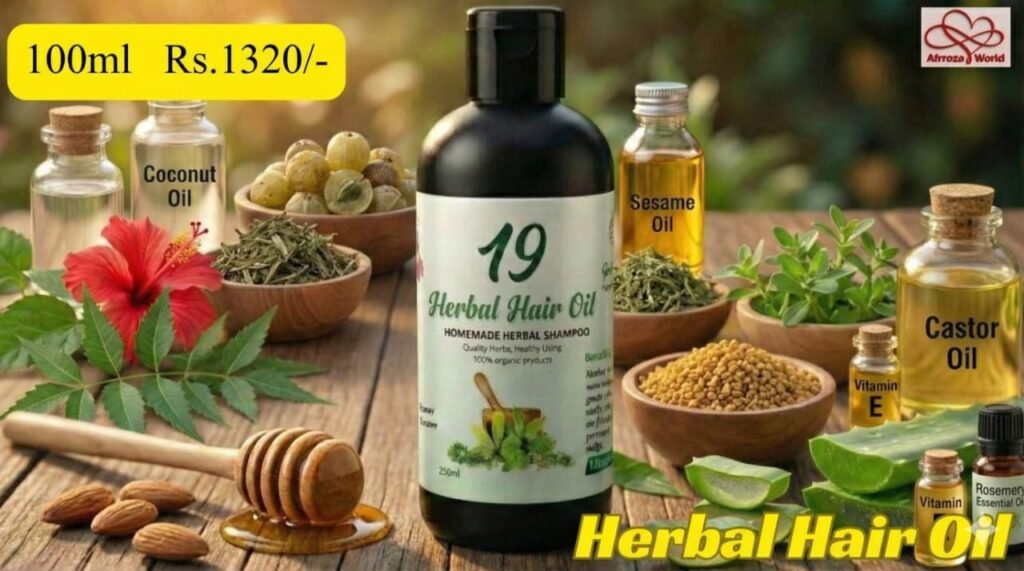
Our 19 Herbal Hair Oil (100ml Rs 1,320) is made for the twice-a-week pre-wash oiling in this routine — a homemade herbal oil in small batches, with formulas supervised by certified Tabib Mr. Hafiz Yasir Latif Qureshi. For weak, breaking winter hair, the 19 Egg Protein Shampoo (200ml Rs 1,200 · 250ml Rs 1,500) is the protein-care wash to follow it with. Not sure which products suit your hair? Take the free Product Finder Quiz — it asks a few questions and recommends from the range. To order, message us on WhatsApp: +92 335 7513111.
An honest note: this routine supports the scalp and reduces breakage. It cannot regrow hair lost to genetics or hormones, repair split ends, or cure scalp disease. If hair falls in patches, very suddenly, or with pain, sores or heavy flaking, see a doctor rather than relying on a home routine.
Frequently asked questions
Should I wash less in winter?
Yes, usually. Two to three washes a week suits most people in winter. Daily washing in dry, cold weather tends to dry the scalp further, while not washing at all lets build-up sit. Two to three times is the middle path.
Is hot water really that bad for hair?
Very hot water strips the scalp’s natural oils and leaves hair rougher after every wash. Lukewarm water cleans just as well. You do not need cold showers — just water that is comfortable, not steaming.
Does oiling help in winter, or make hair greasy?
Oiling helps when it is a pre-wash step: oil, wait, wash it out. It only leaves hair greasy if too much is used, or if it is left on for days without washing. Twice a week, washed out properly, is the winter sweet spot.
My scalp is itchy every winter. Is it dandruff?
Not necessarily. Winter dryness gives small, dry, white flakes and a tight feeling; dandruff gives larger, slightly oily flakes and often a red, itchy scalp. Read the dandruff guide for the full comparison, and see a doctor if the scalp is red, sore or flaking heavily.
Should I stop using conditioner or oil in winter?
No — winter is when hair needs conditioning most. The mistake is piling on heavy products and not washing them out, not conditioning itself. A light oiling before washing, and a mild wash afterwards, is enough.